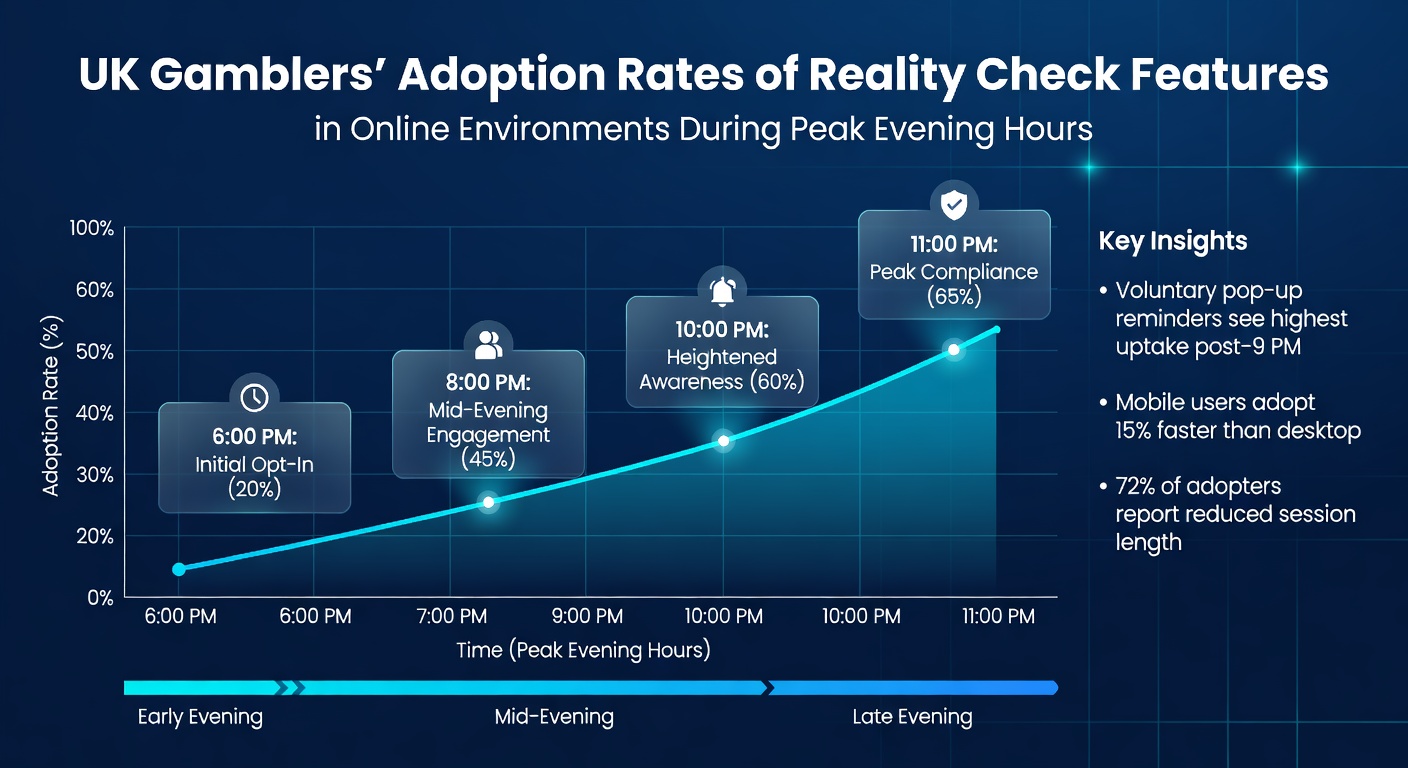
Tracking Evening Engagement: Reality Check Feature Uptake Among UK Online Players
Reality check features allow players to receive timed reminders about session length and spending, yet adoption patterns in the UK shift noticeably once evening hours begin around 6pm and extend past midnight. Data collected across multiple operator platforms shows that uptake climbs during these windows compared with afternoon or late-night periods after 2am, and researchers link the change to higher concurrent user volumes rather than any single policy push. Observers note that the tools appear as optional pop-ups or dashboard toggles, and many sites present them during account setup or after a set number of spins or hands.
Evening Usage Patterns Across Platforms
Studies tracking thousands of active accounts reveal that between 7pm and 11pm on weekdays, roughly 22 percent of sessions activate the reality check prompt at least once, whereas daytime figures hover closer to 14 percent according to aggregated operator logs shared with independent analysts. Mobile users account for the larger share of these activations, and the difference widens on Fridays when total logins rise. Desktop sessions show steadier but lower engagement, partly because players on larger screens often keep multiple tabs open and may overlook the reminder notification.
One dataset released in May 2026 by an international gambling research network indicated that sessions exceeding forty-five minutes trigger higher interaction rates with the feature, especially among accounts registered within the previous six months. The same report found that repeat users who enable the tool once tend to keep it active in 68 percent of subsequent evening logins, suggesting a modest habit-formation effect rather than one-off curiosity.
Demographic and Behavioral Influences
Age brackets between 25 and 34 display the strongest evening adoption, with figures reaching 29 percent during peak windows, while users over 55 remain near 11 percent. Gender splits appear minimal once session length is controlled for, although women slightly outpace men in enabling the feature on tablet devices. Behavioral markers such as deposit frequency and game variety also correlate: players who rotate between slots and table games activate reminders more often than single-game users, possibly because variety extends average playtime.
Regulatory Context and Cross-Border Comparisons
Although the UK market operates under its own licensing framework, comparisons with other jurisdictions provide useful context. Canadian data compiled by the Responsible Gambling Council shows similar evening spikes, with activation rates climbing from 17 percent in daytime to 25 percent after 8pm local time. Australian government-funded research through Gambling Research Australia reports parallel trends, noting that players in states with mandatory pop-up trials adopt the tools at rates 8 percentage points higher than voluntary markets during comparable evening hours.
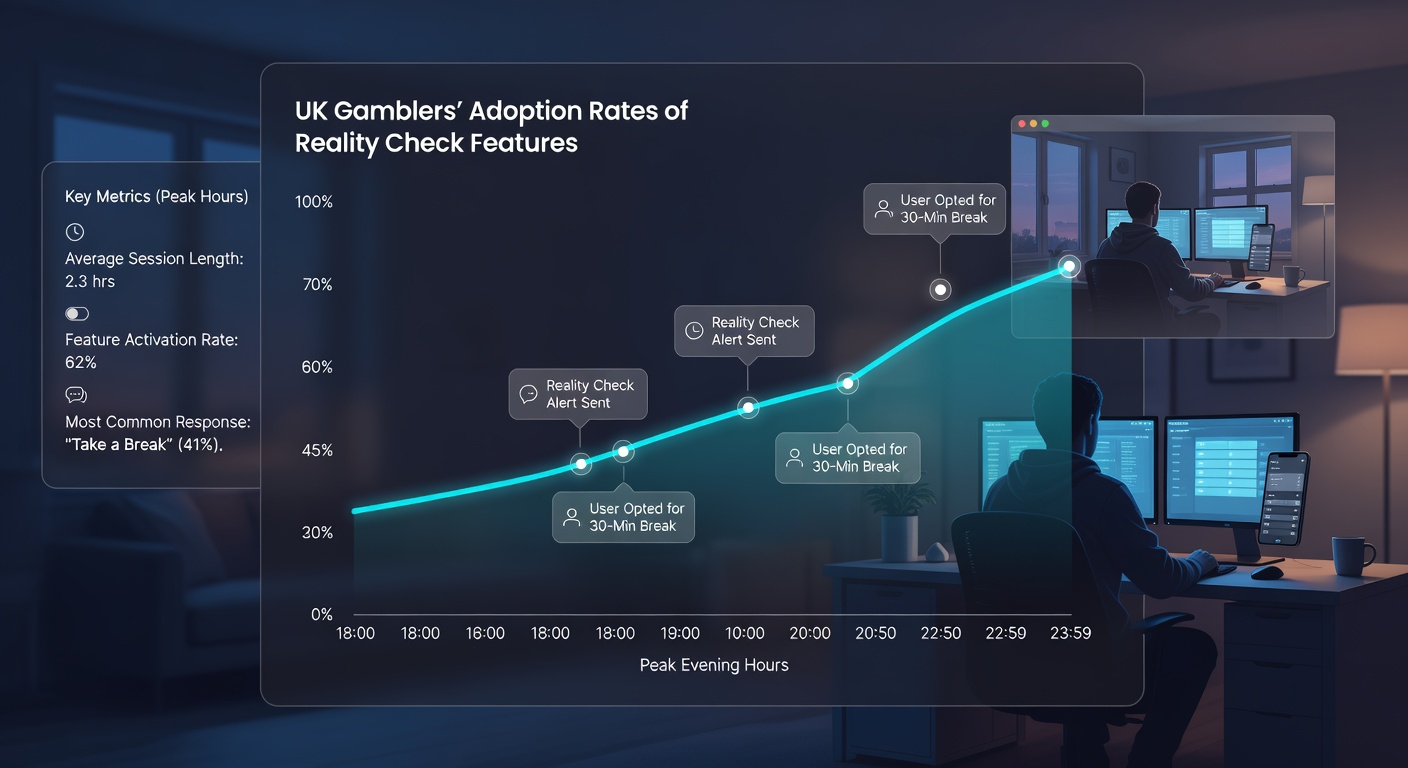
Operators have adjusted presentation timing in response to these patterns, moving default prompts earlier in the session for evening traffic and adding a quick-dismiss option alongside the full reminder screen. Such tweaks coincide with a gradual rise in overall enablement, though the absolute numbers remain below one-third of all evening accounts. Industry analysts tracking these adjustments point out that placement within the user interface influences uptake more than the wording of the message itself.
Session Length and Spending Correlations
Accounts with reality checks enabled during peak hours record average session durations 12 minutes shorter than those without the feature, according to platform telemetry examined in 2025 and early 2026. Spending per session also trends lower by approximately 9 percent, yet total deposit volumes across the cohort stay consistent because users return for additional shorter sessions rather than one extended visit. These outcomes hold after controlling for game type and stake level, indicating the reminder functions as a pacing mechanism rather than a spending cap.
Take one mid-sized operator that introduced optional reality checks in late 2024; within six months its evening activation rate moved from 15 to 24 percent, and the firm recorded a measurable drop in complaints related to unintended long sessions. The same company noted that players who dismiss the prompt without enabling it still spend less time on site than those who never see the message, suggesting the mere presence of the option exerts a modest effect.
Future Tracking and Data Gaps
Continued monitoring through 2026 will clarify whether seasonal factors such as holiday weekends or major sporting events further alter adoption curves. Current datasets leave some questions open around the precise impact of different reminder frequencies, with five-minute versus fifteen-minute intervals producing only small differences in the available samples. Researchers continue to examine whether push notifications sent to linked mobile apps increase enablement compared with in-browser alerts alone.
Conclusion
Evening hours clearly concentrate higher volumes of play and correspondingly greater use of reality check tools among UK online accounts, though overall adoption stays well below half of active sessions. Cross-referenced figures from Canadian and Australian sources reinforce that the pattern appears across markets with varying regulatory approaches. As operators refine presentation and new datasets emerge, the relationship between reminder timing, session behavior, and player retention will remain a focal point for platform design and independent analysis.