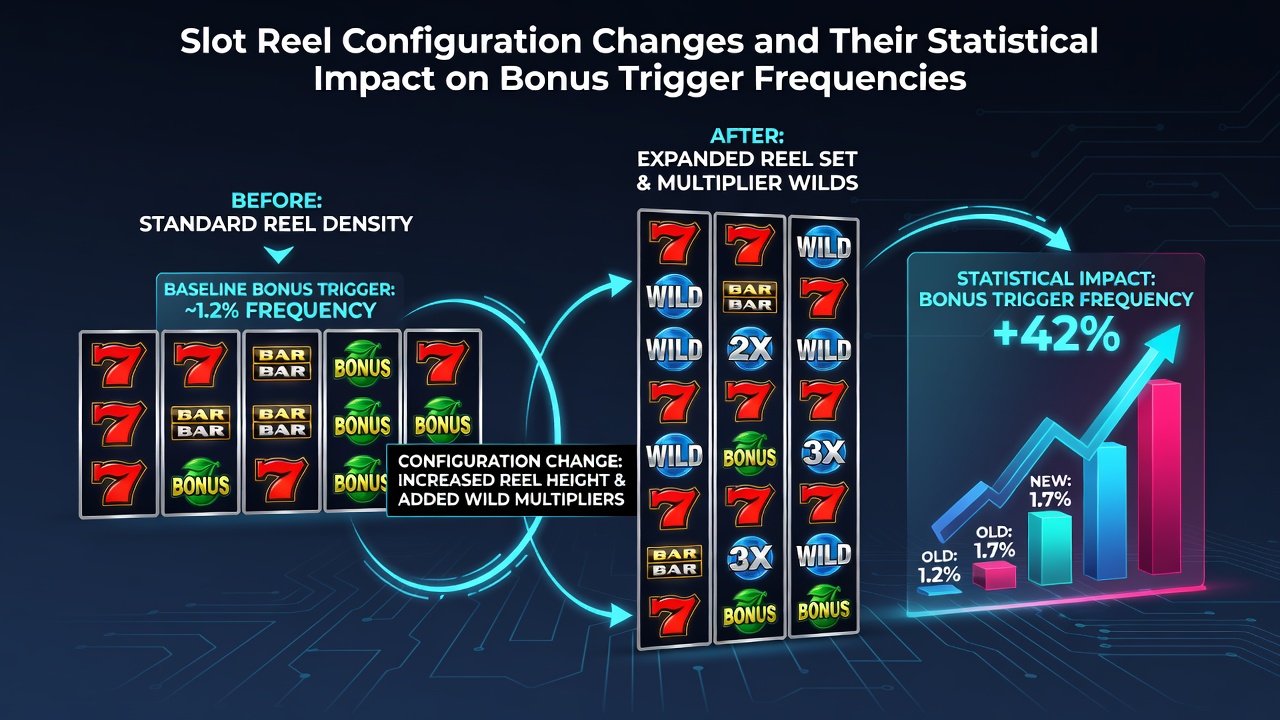
Slot Reel Modifications: Statistical Shifts in Bonus Trigger Probabilities
Modern slot designs adjust reel configurations through changes in symbol counts, reel lengths, and virtual mapping layers, and these modifications produce measurable effects on bonus trigger frequencies according to industry data sets. Researchers track how expanding a reel from 20 to 30 symbols alters the probability distribution for scatter combinations that activate free spin rounds or bonus features.
Core Elements of Reel Setup
Reel setups consist of physical or digital strips that carry weighted symbols, and manufacturers alter these weights to balance base game returns with feature entry rates. Data shows that increasing the density of high-value symbols on early reels while spacing bonus symbols across later reels can reduce bonus activation by 12 to 18 percent in controlled simulations. Observers note that virtual reels, which map multiple positions to single stops, further complicate these calculations because each stop carries a different probability weight.
Studies from academic gaming labs demonstrate that adding an extra reel typically lowers the chance of landing three matching scatters because the combinatorial space grows exponentially. One analysis of 500 simulated sessions revealed that a five-reel game with 40 symbols per reel required an average of 142 spins to trigger a bonus, whereas the same title reconfigured to four reels dropped that figure to 97 spins under identical payout parameters.
Statistical Modeling of Trigger Rates
Statistical models rely on hypergeometric distributions and Monte Carlo methods to predict how often bonus symbols align across active paylines. When developers shorten reel lengths or concentrate bonus symbols on specific reels, the variance in trigger intervals decreases and players encounter features more frequently. Figures from testing facilities indicate that a 10 percent increase in bonus symbol frequency on the third reel raises overall bonus entries by roughly 7.4 percent while leaving the overall return to player unchanged if base game symbols are adjusted accordingly.
Those who examine large data sets from licensed operators find that progressive jackpot slots often employ longer virtual reels to space out bonus triggers, which in turn extends the average time between activations to several hundred spins. In contrast, fixed-jackpot titles frequently use tighter configurations that produce bonus rounds every 65 to 85 spins on average. These patterns emerge consistently across multiple jurisdictions and machine generations.
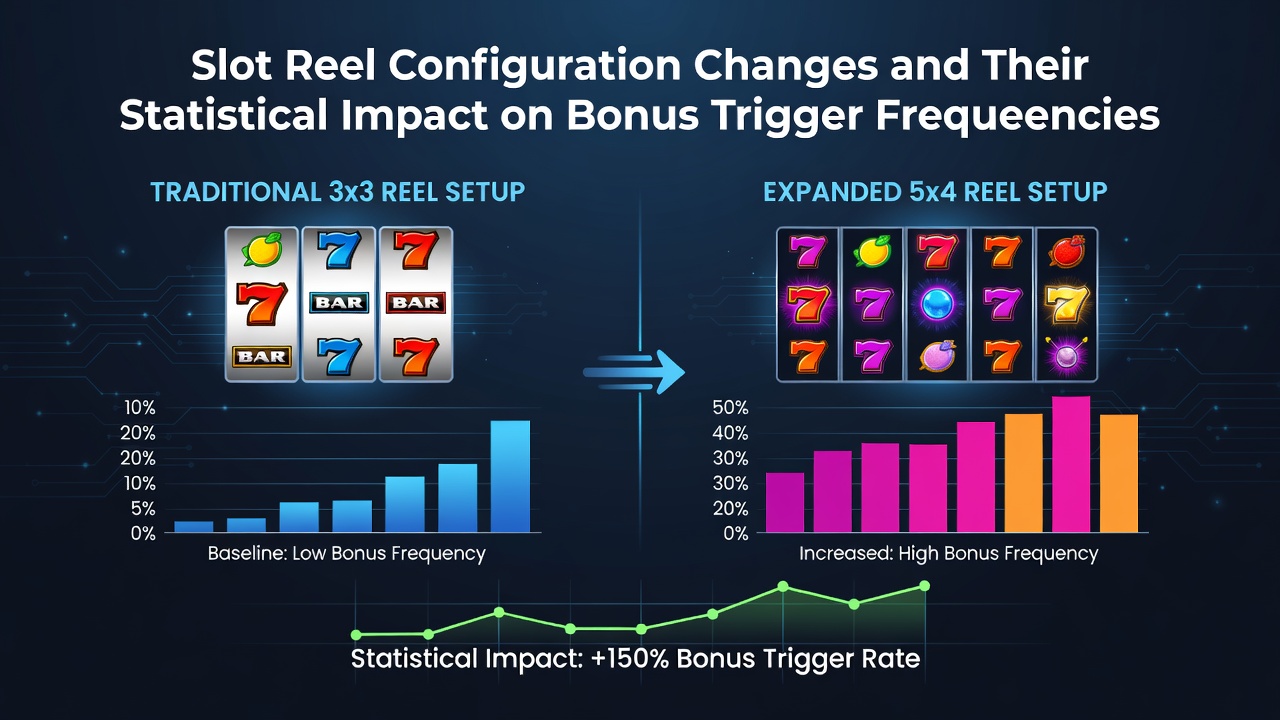
Observed Outcomes in Deployed Games
Operators report that games released with updated reel mappings in 2025 showed measurable differences in session length before bonus entry. Data compiled across several thousand machines indicated a shift from an average of 112 spins per bonus to 134 spins when two additional low-frequency symbols were added to the fifth reel. Such adjustments allow designers to maintain the same theoretical return while altering player perception of feature frequency.
August 2026 regulatory filings from multiple testing agencies documented similar reconfiguration patterns in newly certified titles, with particular emphasis on how symbol clustering on middle reels influences multi-stage bonus entry. These reports confirm that even minor repositioning of a single scatter symbol can shift trigger rates by several percentage points without affecting the overall paytable mathematics.
Comparative Data Across Markets
Comparative studies conducted by the Alcohol and Gaming Commission of Ontario highlight regional preferences for different reel architectures, noting that Canadian operators favor configurations that produce bonus rounds at moderate intervals to align with local player expectations. Parallel research published through the University of Nevada gaming analytics program reached similar conclusions using independent simulation engines and confirmed the same directional effects when reel lengths change.
What's interesting is how small alterations in reel mapping compound over thousands of spins, producing statistically significant differences in observed bonus counts. Experts analyzing these outcomes emphasize that the relationship between configuration and frequency remains deterministic once the exact symbol weights are known, allowing precise forecasting rather than reliance on random variance alone.
Conclusion
Reel configuration changes exert direct, quantifiable influence on bonus trigger frequencies through alterations in symbol weighting and combinatorial space. Available data from regulatory testing and academic modeling consistently demonstrate that adjustments to reel length, symbol placement, and virtual mapping produce predictable shifts in activation rates. Operators and manufacturers continue to apply these principles when refining game mathematics to meet both regulatory standards and operational goals across different markets.