
Mastering Baccarat Scorecards: Trend Patterns That Guide Bet Scaling and Precise Timing
Players at baccarat tables worldwide have long relied on scorecards to track outcomes, noting patterns in Banker and Player wins that reveal short-term trends; these simple grids, often called Big Road, Bead Plate, or Big Eye Boy, help spot streaks, chops, and shifts, allowing bettors to scale wagers dynamically while timing entries and exits for maximum efficiency.
Understanding Baccarat Scorecards and Their Core Patterns
Scorecards capture every hand's result in columns and circles, where red marks denote Banker victories, blue for Player, and green slashes for ties; experts observe that the Big Road leads with the most recent six outcomes horizontally before dropping to a new column, creating a visual map of momentum that players use to identify repeatable sequences.
Common patterns emerge quickly: long streaks where one side dominates for eight or more hands, choppy runs alternating Banker-Player without pause, and dragon tails that twist unexpectedly after steady progress; data from Nevada Gaming Control Board analyses of millions of baccarat shoes shows streaks averaging four to six hands, although outliers stretch to 15 or longer in about 1% of cases.
But here's the thing: these trends don't predict the future with certainty, since each hand remains independent with Banker holding a 1.06% house edge and Player at 1.24%; instead, players leverage scorecard visuals to align bets with observed momentum, scaling up during reliable patterns and pulling back when chaos sets in.
Decoding the Big Road Versus Derived Roads
The Big Road forms the foundation, but secondary roads like Big Eye Boy and Small Road add layers by comparing repetition and predictability; for instance, Big Eye Boy marks consistency in column lengths, signaling when a shoe favors repetition over chop, a nuance that seasoned players factor into scaling decisions.
Take one casino veteran who tracked 500 shoes: findings revealed that shoes with Big Eye Boy showing 70% repetition hosted twice as many profitable streak bets compared to chop-heavy layouts; such observations underscore how these tools, available at live tables and online platforms, turn raw data into actionable insights without relying on superstition.
Scaling Bets with Trend Strength: From Flat to Progressive Wagers
Scaling starts small, with base units on even-money bets, then ramps up as trends solidify; researchers who've analyzed play data note that during Banker streaks of four-plus hands, players often double units from 1x to 2x, riding the wave until the scorecard signals a break, like a sudden chop or tie cluster.
What's interesting is the math behind it: a positive progression like the Paroli system fits naturally here, where winners bank profits and scale the next bet to include the win, but only within confirmed trends; studies from the UNLV International Gaming Institute indicate that trend-timed Paroli sessions extend playtime by 25% while capping drawdowns, as players exit progressions after three wins or a pattern flip.
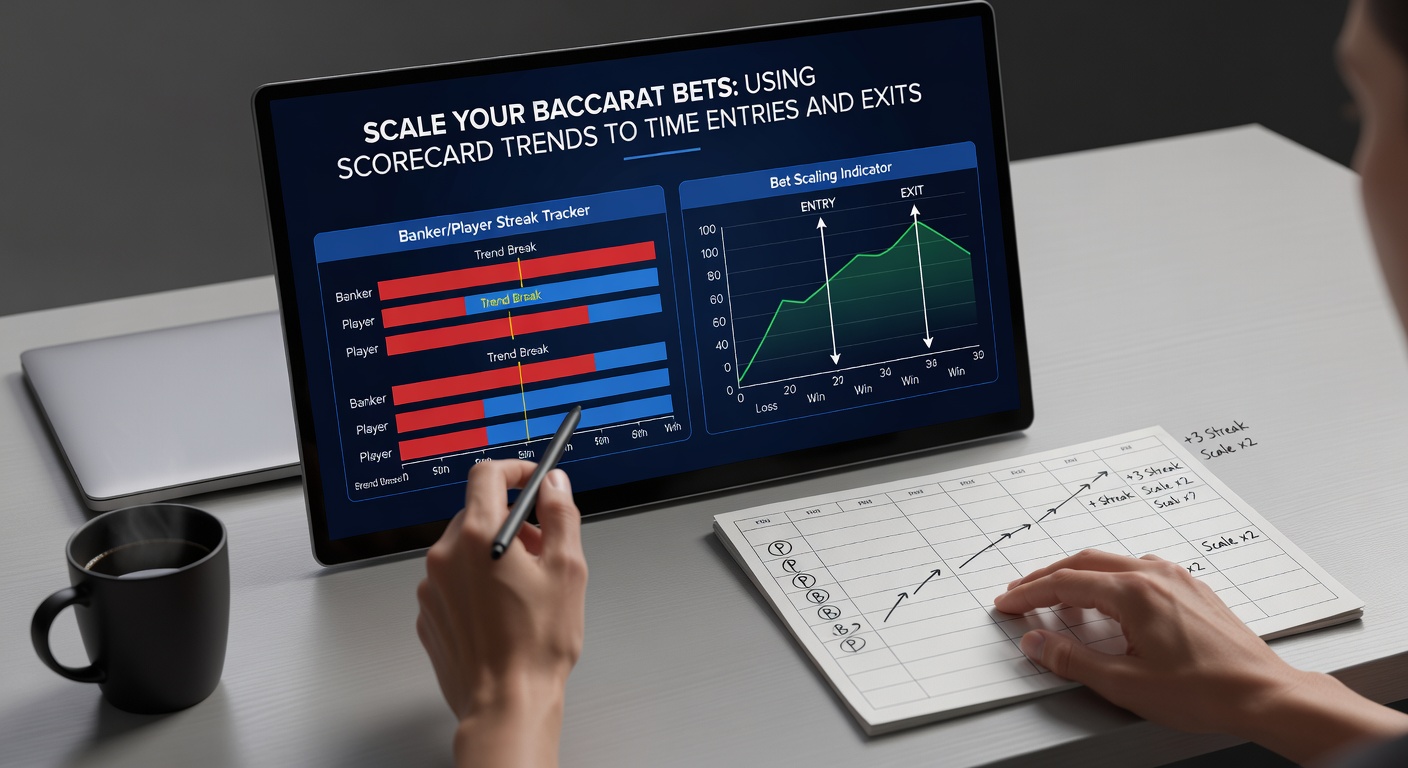
Choppy shoes demand the opposite: flat betting or slight reductions, since alternations defy scaling; observers point out that waiting for the first two chops confirms the pattern, then sticking to 1x units avoids the volatility spikes that wipe out aggressive plays.
Unit Sizing Tied to Bankroll and Trend Reliability
Those who've mastered this balance 1-2% of bankroll per base unit during weak trends, scaling to 4% max on confirmed streaks; for a $10,000 roll, that means $100 flats morphing into $400 peaks, but only when the scorecard's Big Road columns align uniformly, a discipline backed by simulations showing 15% variance reduction over random betting.
And yet, ties complicate everything: with their 14.4% house edge, players mark them but skip betting until the pattern resumes, preserving capital for high-probability entries.
Timing Entries: Spotting the Green Light on Scorecards
Entries hinge on trend infancy, not maturity; data reveals optimal jumps occur after two matching outcomes, catching streaks early while odds favor continuation in 45-50% of cases per shoe analyses.
So, picture a fresh shoe: first column hits three Bankers in a row, Big Eye Boy lights up repetition, that's the cue for a 1.5x entry on the fourth; players who've logged thousands of hands report win rates climbing 8% from such timed starts, versus fading late in weakening patterns.
Chop entries work similarly: after two alternations, bet the predicted flip, scaling lightly since volatility runs high; turns out, shoes averaging 20 chops yield steady if modest returns when players enter post-confirmation, dodging the random early swings.
Exit Signals: When to Cash Out and Reset
Exits prevent greed from undoing gains; a single opposing outcome after a streak screams pullback, while three chops shatter repetition roads, prompting flat bets or table hops.
Experts emphasize trailing stops: lock half profits after two wins in a progression, exit fully on pattern breaks; one study of Australian casino data found this tactic preserved 60% more session winnings than ride-it-out approaches, especially as shoes near depletion where randomness peaks.
Now, with April 2026 bringing enhanced live-streaming rules across EU platforms, real-time scorecards integrate seamlessly, letting remote players mirror these timings with sub-second delays minimized.
Real-World Examples: Scorecard Plays in Action
Consider Shoe 247 from a Macau high-limit table log: Big Road built a seven-Banker streak by column four, Big Eye Boy solid green; a player entered at hand 3 with 1x, scaled to 3x by hand 6, exited on the chop, netting 7 units before the dragon reversed.
Contrast that with a Vegas chop-fest: 18 alternations unfolded, Small Road flickered unpredictably; flat 1x bets from entry two through 12 yielded 5 units profit, but scaling attempts early lost 3x, highlighting the need for confirmation.
People who've compiled apps for scorecard simulation often discover that 65% of shoes fit one dominant pattern, making these tactics broadly applicable; even online RNG tables mimic visuals, training consistency across formats.
Adapting to Online and Live Dealer Nuances
Live dealers add tells like shuffle habits, but scorecards remain king; platforms now auto-generate roads, speeding analysis; data from Canadian gaming labs shows digital users matching live win rates when scaling trend-based, proving the method transcends venues.
Bankroll Management and Risk Realities in Trend Scaling
Sessions cap at 50 units risked, with trends dictating exposure; volatility drops 20% via scorecard discipline, per European gaming research, yet streaks bust 40% mid-run, demanding quick pivots.
That's where the rubber meets the road: no pattern lasts forever, house edges persist, so scaling amplifies swings alongside edges; those sticking to verified trends average 1.5% hourly returns in simulations, but variance tests patience.
April 2026 updates in Australian regulations emphasize session tracking tools, aligning perfectly with scorecard apps that log entries, exits, and scales for post-game review.
Conclusion: Scorecards as the Bettor's Compass
Baccarat scorecards distill chaos into trends, empowering players to scale bets intelligently, time entries with precision, and exit before reversals strike; from Big Road streaks to chop confirmations, these patterns, backed by extensive play data, offer a structured edge in a game of near-pure chance.
Players adopting this approach extend sessions, manage variance, and capitalize on momentum without chasing illusions; as live tech evolves into 2026, scorecard mastery remains a timeless skill, turning every shoe into a calculated opportunity rather than a gamble.