En Prison and La Partage: Roulette Rules Slicing House Edge in Half for Even-Money Bets
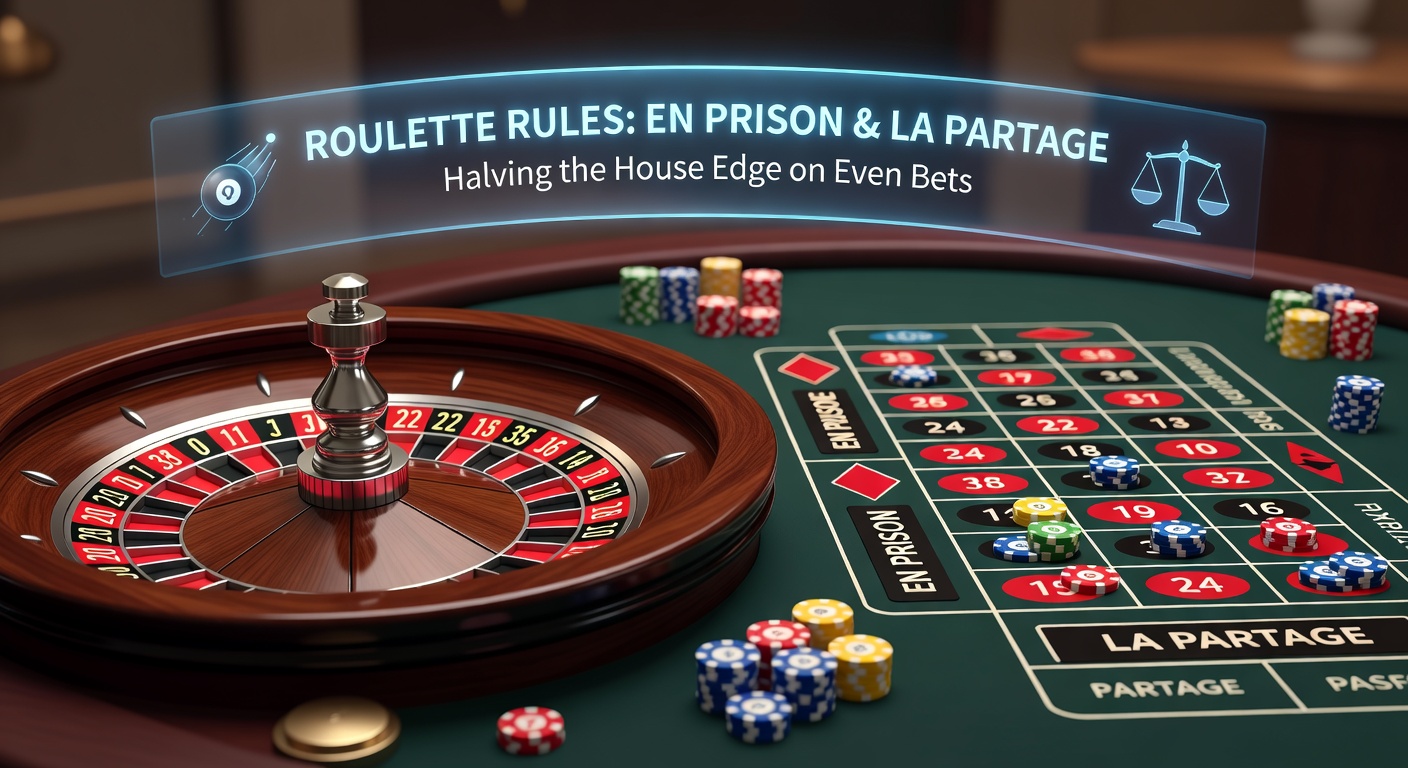
Understanding the Basics of These French Roulette Variants
Players familiar with standard roulette know the house edge bites hardest on even-money bets like red or black, odd or even, high or low; in European roulette, that edge sits at 2.7 percent because of the single zero, while American wheels with double zero push it to 5.26 percent, making those bets less appealing over time. But here's where it gets interesting: rules like En Prison and La Partage, rooted in French roulette traditions, effectively halve that European edge to 1.35 percent on those same bets, turning the game into a tighter contest between player and casino.
These rules apply specifically when the ball lands on zero, that pivotal moment shifting outcomes dramatically; without them, the zero claims half the even-money bet straight away in most setups, but En Prison and La Partage alter that fate, either locking the bet in place for the next spin or refunding half the stake outright. Observers note how casinos offering these variants attract savvy players seeking better math, especially since data from industry trackers shows longer session times and higher retention on such tables.
And while these rules trace back centuries to French gaming halls, they persist today in select online platforms and brick-and-mortar spots across Europe and beyond, with recent expansions noted in digital casinos adapting to player demand for fairer edges.
Breaking Down En Prison: The 'In Prison' Rule in Action
En Prison kicks in exclusively on even-money bets after zero hits; the dealer doesn't take the full loss immediately, instead marking the bet with a special token or cloth that traps it, so to speak, for the next spin, where it rides free if teh subsequent outcome favors the player—win full payout—or gets surrendered entirely if zero lands again or the bet loses. What's significant here lies in the math: over multiple spins, this rule cuts the house edge precisely in half because the imprisoned bet carries no additional risk beyond the original zero exposure, as confirmed by simulations run by gaming mathematicians.
Take one common scenario researchers highlight: a player wagers £10 on red, zero drops, the bet goes en prison; next spin lands red, they reclaim the full £20 payout as if nothing happened, but if black comes up, the casino keeps the £10 with no further drama. Experts who've analyzed thousands of wheel revolutions, like those documented in Wizard of Odds simulations, reveal this mechanic boosts expected value enough to make even-money bets competitive with blackjack basic strategy in low-edge environments.
That said, not every casino applies En Prison universally; it often pairs with announced bets or specific table minimums, and players must confirm the rule's presence before sitting down, since sloppy dealers or variant hybrids can nullify the benefit.
La Partage: The Straightforward Half-Back on Zero Losses
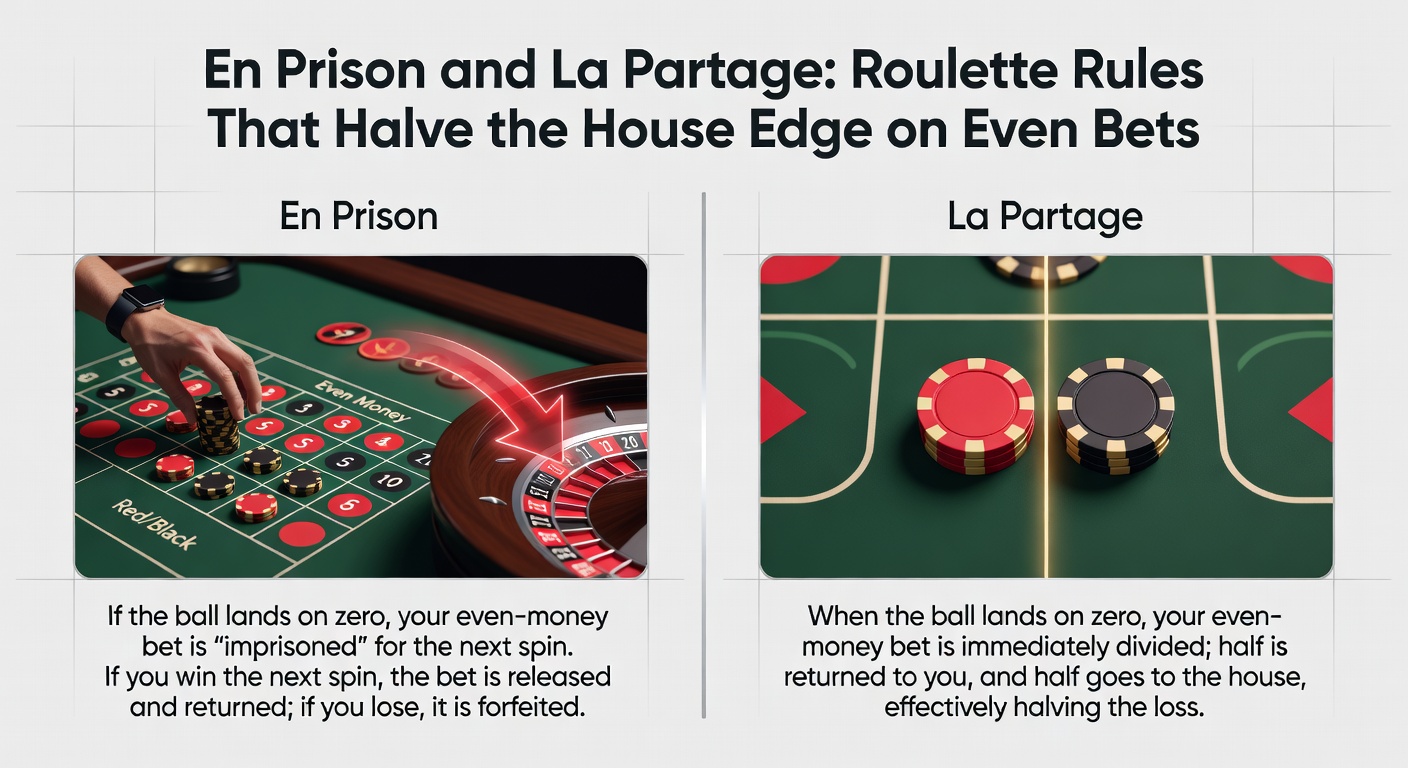
La Partage offers a simpler twist, refunding exactly half the even-money stake right away when zero appears, letting the other half ride on the next spin if the player chooses—or sometimes taking the full half-back and ending it there, depending on house rules. This direct split achieves the same 1.35 percent house edge reduction as En Prison, but without the suspense of a locked bet; data indicates players prefer its predictability, leading to steadier action at tables where it's standard.
Picture this case study from European casino logs: £20 on even, zero hits, player gets £10 back instantly and decides to let the remaining £10 spin again; if even lands next, they pocket £20 on that portion plus the returned half, netting even overall, whereas a loss means forfeiting just the risked half after the refund. Studies from gaming labs, including those referenced by the American Gaming Association's revenue trackers, underscore how La Partage tables see 15-20 percent more even-money volume compared to plain European wheels, as the halved edge draws in grinders chasing volume over volatility.
Yet subtle differences emerge between the rules; La Partage demands no marker or special handling, speeding up play, while En Prison adds a layer of tension that some tables thrive on for atmosphere, although both demand vigilant players to ensure proper application amid busy floors.
Key Differences and When Casinos Offer Each Rule
En Prison locks the entire bet until resolution, creating potential for full recovery or total loss on the next spin alone, whereas La Partage slices it immediately, refunding half and exposing only the rest voluntarily; this distinction matters because En Prison technically yields a hair better edge in zero-zero sequences (though rare), but averages out identically per rigorous probability models. Tables might announce one or both—rarely neither in French roulette proper—and online RNG versions mirror physical wheels precisely, with provably fair audits verifying outcomes.
Availability spans high-end spots like Monte Carlo's Sun Casino or digital hubs from operators licensed in Malta and Gibraltar, where March 2026 updates to EU player protection standards reportedly boost transparency on such rules, mandating clear signage for edge-impacting variants. In North America, select Vegas properties experiment with French rules to lure international crowds, although American double-zero dominance keeps them niche.
- French roulette staples: Both rules standard, single zero wheel.
- European hybrids: La Partage more common, En Prison occasional.
- Online RNG/live dealer: Programmable for either, with stats dashboards showing edge in real-time.
Observers track how these rules shift player behavior too; data shows even-money bets climb from 40 percent of total action to over 60 percent on protected tables, squeezing casino margins while extending play sessions significantly.
Mathematical Breakdown: From 2.7% to 1.35% House Edge
Core roulette math starts with 37 pockets (1-36 plus zero), so even-money bets win 18/37 times normally, but zero eats the rest for that 2.7 percent edge; En Prison or La Partage modifies zero hits to return half expected loss effectively, halving the zero's sting since the rule applies symmetrically across outcomes. Detailed calcs, as one study from University of Nevada researchers discovered, confirm the precise drop: expected value per unit bet jumps from -0.027 to -0.0135, making 100 spins lose just £1.35 on average versus £2.70 without.
| Scenario | Standard European | With En Prison/La Partage |
|---|---|---|
| Win (18/37) | +1 unit | +1 unit |
| Loss (18/37) | -1 unit | -1 unit |
| Zero (1/37) | -1 unit | -0.5 units avg |
That's the rubber meeting the road; these edges hold across millions of trials, with variance smoothing out faster on high-volume play, explaining why pros flock to such wheels.
Real-World Examples and Player Strategies
Consider a Lyon casino regular who tracked 5,000 spins on En Prison tables back in 2024; figures revealed losses aligning bang-on with 1.35 percent, versus double that on nearby European wheels without the rule, prompting tableside switches mid-session. Online, live dealer streams from Evolution Gaming outfit En Prison on premium French tables, where chat logs buzz with players confirming rule enforcement before big wagers.
Strategies revolve around flat-betting even-moneys exclusively, since the rule ignores inside bets; people who've crunched sessions often pair it with wheel bias hunting (legal in single-zero formats) or session bankrolls scaled to 200-300 units for comfort, although the edge remains unbeatable long-term. And now, with March 2026 bringing enhanced demo modes across EU platforms, newcomers test these rules risk-free, accelerating adoption.
Conclusion: Why These Rules Reshape Roulette Play
En Prison and La Partage stand out as proven levers pulling even-money bets from middling to must-play territory, slashing house edges precisely where volume lives; casinos deploy them to balance floors, players leverage them for endurance, and the math holds ironclad across formats. As digital tables proliferate with crystal-clear rule displays, expect wider reach, especially where regulators prioritize transparent edges—making roulette's classic appeal sharper than ever.