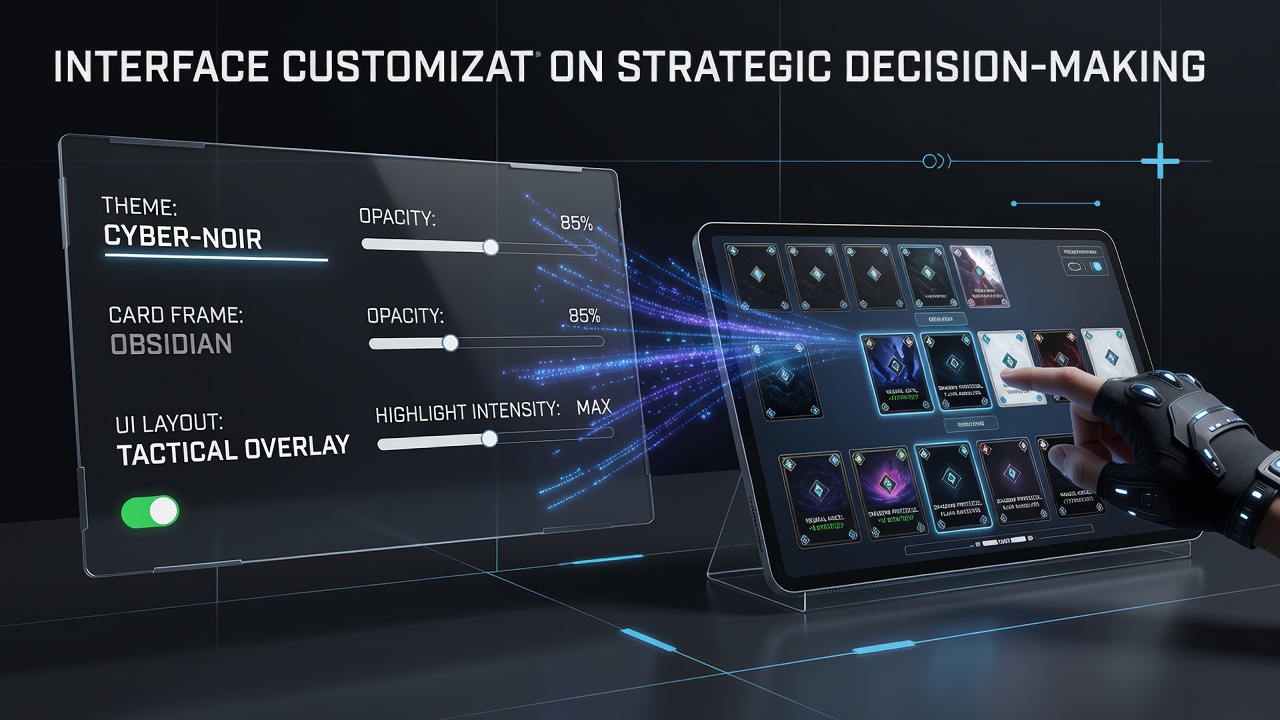
Custom Interface Options and Their Role in Shaping Strategies Within Digital Card Game Platforms
Interface customization features in digital card games let players adjust visual elements, information displays, and control schemes to match their preferences, and these adjustments often alter how decisions unfold during play. Players who modify layouts gain quicker access to data such as opponent histories, probability indicators, and hand rankings, which shifts the pace and depth of strategic planning compared to default setups.
Core Customization Categories in Card Game Software
Developers typically offer several adjustment layers that range from simple color swaps to complex heads-up display configurations, and each layer interacts with player cognition in measurable ways. Card size scaling allows users to enlarge or shrink playing surfaces, while deck themes alter contrast ratios that affect how rapidly symbols register during fast rounds. Information panels can be repositioned or collapsed entirely, which changes the amount of peripheral data a player processes before committing to an action.
Research from human-computer interaction labs shows that repositioned probability meters reduce decision latency by measurable margins when players face repeated betting scenarios, and this pattern holds across multiple titles released between 2023 and 2025. Color-blind modes and alternative card art further refine visibility, yet they also influence risk assessment because certain palettes highlight suit patterns more clearly than others.
Impact on Information Processing and Choice Timing
When players enable compact HUDs that consolidate stats into single glanceable zones, they tend to incorporate historical opponent data into calculations more consistently than when the same metrics sit in separate windows. This consolidation supports multi-step reasoning chains during tournament play, where stack sizes and position matter simultaneously. Conversely, players who keep expanded panels active sometimes experience slower response windows because attention splits across more visual elements.
Studies conducted at North American universities tracking eye movements during simulated sessions found that users who customized opacity sliders maintained longer focus on relevant board textures, and this translated into fewer missed triggers for conditional plays such as check-raises or semi-bluffs. The same data sets revealed that default interfaces without adjustments produced higher rates of reactive rather than proactive decisions across sample groups.
Examples from Major Digital Card Titles
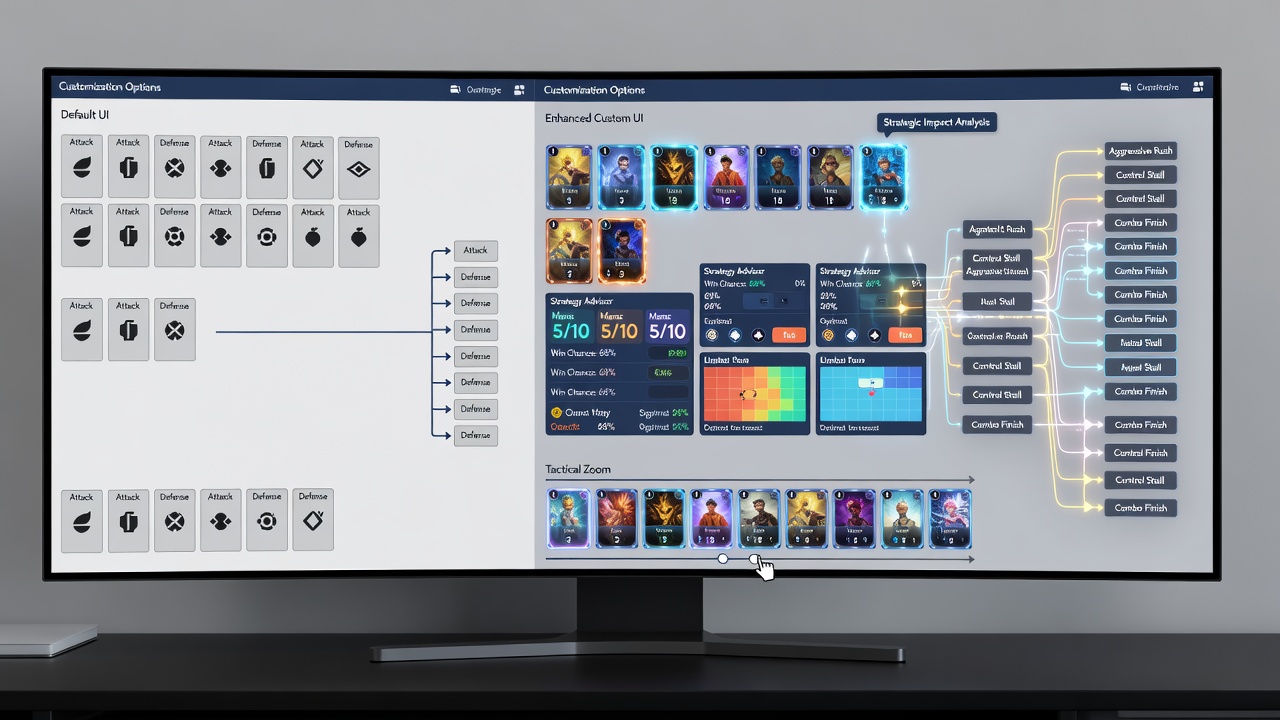
Popular platforms handling variants of poker and trick-taking games illustrate these dynamics in practice, and several updates rolled out in early 2026 refined their customization suites further. One widely used client introduced modular stat blocks that players could anchor to screen corners, and subsequent telemetry indicated shifts in average hand duration as users adapted their layouts. Another title released in June 2026 added dynamic zoom functions tied to turn timers, allowing participants to magnify specific card zones without disrupting overall table visibility.
Observers tracking these changes note that players who experimented with betting slider sensitivities completed actions more precisely when facing time pressure, whereas rigid default controls sometimes forced abbreviated calculations. Case records from competitive circuits show participants who fine-tuned notification sounds reduced instances of overlooking opponent folds, which preserved stack integrity over extended sessions.
Broader Patterns Across Player Populations
Industry reports compiled by gaming research groups in Europe and Australia indicate that customization adoption rates climbed steadily through 2025, with tournament participants showing higher engagement than casual users. Those who invested time configuring hotkeys reported improved consistency in executing complex lines such as multi-street value betting or precise river shoves. Data from these regions also highlights that players who avoided customization altogether maintained steadier but less optimized win rates in low-stakes environments.
Regulatory bodies outside the UK, including the Nevada Gaming Control Board and state agencies in Australia, have begun reviewing interface standards for fairness and accessibility, and their guidelines encourage options that do not obscure mandatory game information. This regulatory interest coincides with academic papers examining whether certain custom layouts inadvertently favor experienced users who possess stronger spatial reasoning skills.
Conclusion
Interface customization continues to evolve as a core component of digital card game design, and the documented effects on decision speed, information retention, and tactical variety demonstrate clear connections between visual adjustments and in-game outcomes. As platforms refine their toolsets through 2026 and beyond, the relationship between player-configured environments and strategic execution remains a measurable factor worth continued observation by developers and researchers alike.