
Certification Pathways for Digital Gaming Software in Licensed Markets Worldwide
Digital gaming software undergoes rigorous evaluation before deployment in licensed jurisdictions, where regulators require independent verification of random number generators, payout mechanics, and security protocols to maintain operational integrity across multiple platforms. These standards emerged from decades of regulatory evolution that addressed inconsistencies in early online systems while establishing uniform benchmarks that developers must meet before software reaches end users.
Independent Testing Laboratories Drive Core Evaluations
Accredited laboratories conduct the bulk of technical assessments, examining source code for vulnerabilities and confirming that game outcomes align with advertised probabilities through statistical sampling methods that cover millions of simulated spins or hands. Organizations such as Gaming Laboratories International maintain ISO 17025 accreditation, allowing their reports to satisfy requirements from regulators in North America, Europe, and parts of Asia-Pacific without duplication of effort. Data from these labs shows that most submissions require iterative fixes, particularly around cryptographic seeding for RNG modules, before final approval letters are issued.
Technical Benchmarks Across Major Regions
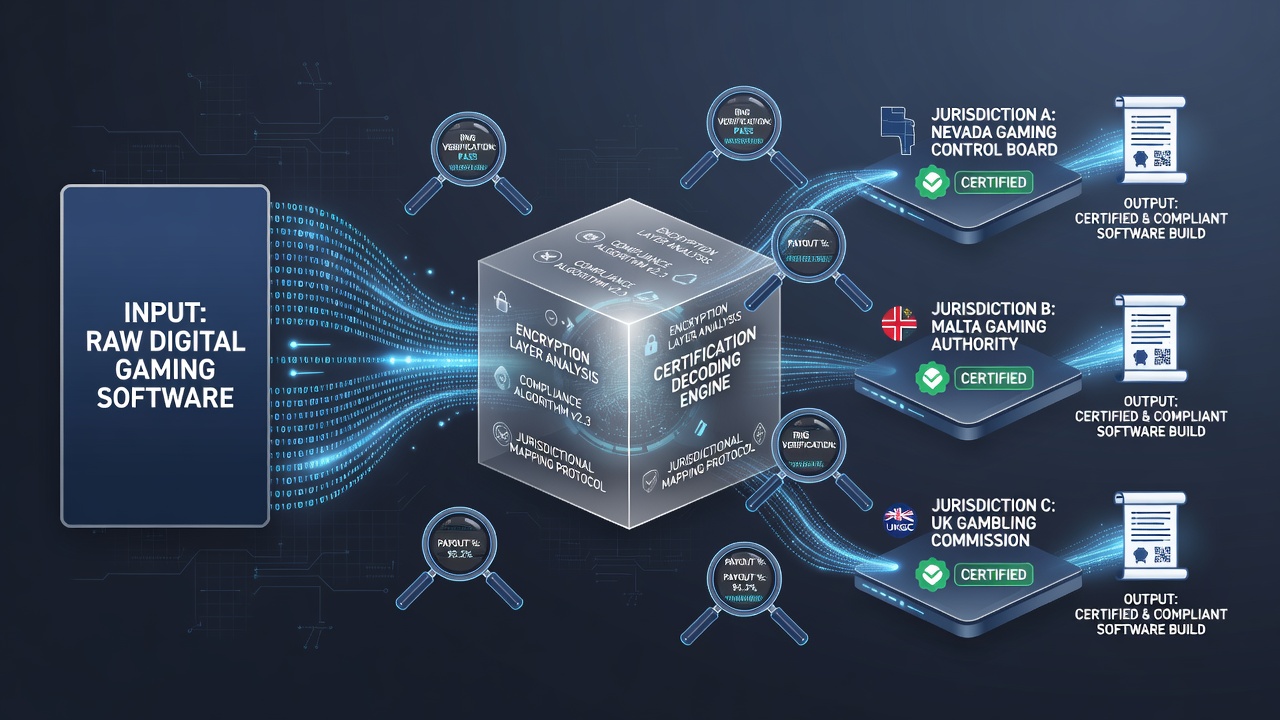
Standards vary by jurisdiction yet share common threads around fairness documentation and audit trails. In Nevada, the Gaming Control Board mandates that all electronic gaming devices submit to field inspections after laboratory sign-off, with specific thresholds for return-to-player percentages that must hold across extended play periods. European authorities in Malta and the Isle of Man apply similar RNG testing but add layers focused on player fund segregation and transaction logging that integrate with broader financial services directives. Canadian provincial regulators, including those in Ontario and British Columbia, emphasize integration testing with centralized monitoring systems that track real-time performance metrics once software goes live.
Asia-Pacific markets introduce additional variables, where Singapore's Casino Regulatory Authority requires on-site hardware validation alongside software reviews, whereas Australian state bodies focus on harm-minimization features embedded directly in game logic. Observers note that developers often prepare modular codebases that allow jurisdiction-specific toggles, reducing re-certification time when expanding into new territories.
July 2026 Protocol Updates and Implementation
Regulatory bodies across several jurisdictions have scheduled synchronized updates effective July 2026 that introduce enhanced requirements for continuous monitoring APIs and expanded penetration testing scopes. These changes build on existing frameworks by requiring software to support automated reporting of anomaly detection thresholds directly to oversight portals, a move that aligns with broader digital infrastructure modernization efforts. Industry reports indicate that preparation timelines for these updates typically span nine to twelve months, with early adopters already submitting beta versions for pre-approval reviews.
Compliance Workflow and Documentation Requirements
The certification process follows a predictable sequence that begins with initial submission packages containing design documents, mathematical models, and executable builds, followed by laboratory scheduling and subsequent remediation cycles. Once a product clears technical review, regulators perform final administrative checks that include background verification of key personnel and confirmation that all marketing claims match certified parameters. Those who've managed multiple submissions often discover that maintaining detailed change logs throughout development dramatically shortens the remediation phase because evaluators can trace modifications back to their origins without requesting additional clarification.
Conclusion
Certification standards for digital gaming software continue to evolve in response to technological advances and cross-border regulatory cooperation, creating a landscape where developers must balance innovation speed against compliance overhead. Jurisdictions maintain distinct priorities yet increasingly recognize mutual acceptance of laboratory reports, which streamlines market entry for products that satisfy the strictest applicable benchmarks. As July 2026 approaches, entities preparing submissions will benefit from early engagement with both testing facilities and regulatory contacts to align development roadmaps with the updated technical specifications now circulating through official channels.